Are Energy Saving Kitchen Appliances Worth It for Budget Cooking?
Last Updated: October 27, 2026
Quick Summary
Energy saving kitchen appliances are worth it for budget cooking when you match the appliance to the job: an air fryer or slow cooker costs far less per use than a full oven, and an induction hob wastes little heat. Free habit changes usually save more, faster, so upgrade only after those.
The oven and hob are the biggest energy users in most kitchens, with everything else far behind.
Two hours in a 200W slow cooker uses about 0.4kWh versus about 4.4kWh for a 2,200W oven.
Size an air fryer to your actual portions, since cooking in two batches wipes out the saving.
Induction hobs need magnetic cookware, so replacing aluminium or copper pans changes the payback period.
A fridge freezer at 250kWh a year on 24p per kWh costs about £60 annually.
Table of Contents
Which Kitchen Appliances Use the Most Energy?
The oven and the hob are the two biggest energy users in most kitchens, and everything else trails far behind them, which is why energy saving kitchen appliances for budget cooking start to matter once you understand that ranking. Energy saving kitchen appliances for budget cooking start to matter once you understand that ranking, because swapping a small appliance for a big one changes your electricity bill more than any other single decision.
Here's the short version. A full electric oven heats a large cavity for every meal. An air fryer heats a small one. An induction hob transfers heat straight into the pan instead of warming the air around it. That difference in heat transfer is where the energy savings live.
Energy consumption in the kitchen comes down to three things: how much space you heat, how long you heat it for, and how much heat escapes. Big appliances lose on all three counts.
Energy-efficient appliances are those that deliver the same cooking result using less power usage. The label tells you part of the story. Your habits tell you the rest.
The practical order of priority for most households:
Cut the oven and hob time you don't need
Use a small appliance for small jobs
Match pan size to ring size
Only then consider an appliance upgrade
That last point matters. Most people jump straight to buying new kit. The free changes usually save more, faster.
Air Fryer Running Costs Compared With a Full Oven
An air fryer typically costs less per use than a full oven because it heats a much smaller space for a shorter cooking time.

A full-size electric oven has to bring a large cavity up to temperature before food even starts cooking. That warm-up alone can take ten to fifteen minutes.
Where air fryers win:
Small portions for one or two people
Reheating and crisping rather than full cooking
Quick sides like chips, vegetables, or halloumi
Anything that fits in a single layer
Where they lose:
A whole chicken or a large roast
Batch meal preparation for a family
Anything needing a wide, flat surface
The honest limitation: an air fryer that's too small means cooking in two batches, which wipes out the saving. Buy one sized to your actual portions, not the biggest model on the shelf.
A common mistake is running the oven for a single jacket potato. That's the exact job a microwave or air fryer handles for a fraction of the running costs.
Induction Hob Energy Use: The Biggest Single Swap
Induction hob energy use is lower than any other hob type because the heat goes into the pan, not the air.
Compare that with a traditional electric hob, which stays hot long after you've finished cooking. That residual heat is electricity use you paid for and didn't need.
The catch is the pans. Induction needs magnetic cookware, so a kitchen full of aluminium or copper pans means replacing those too. That changes the payback period considerably.
Watch out: induction hobs are often sold on the strength of boiling speed alone. The real saving comes from shorter cooking time across every meal, not one dramatic pan of pasta water.
For most households, the induction cooktop is the single biggest energy-efficient swap available in the kitchen. It's also the most expensive, which is why it belongs near the end of the list, not the start.
Slow Cooker Energy Consumption and Batch Cooking
Slow cooker energy consumption is low because the appliance runs at a low wattage for a long stretch. A slow cooker typically draws between 100W and 300W on its low and high settings, with most models sitting around 150W to 250W.
The real win is batch cooking. One slow-cooked chilli or stew covers several meals, so the cost per use drops with every portion you reheat. A 4-litre slow cooker filled with a family chilli might yield six generous portions.
What most guides miss: the slow cooker's advantage isn't just wattage. It's that it replaces an oven that would otherwise run for two hours.
Where the slow cooker loses:
Browning and crisping. You cannot roast, caramelise, or crisp in a slow cooker. Anything needing a crust still needs a hob or oven, which can wipe out the saving.
Speed. If you have not planned ahead, a slow cooker is no help at 6pm.
Small households. A single person cooking one portion at a time will rarely fill the pot enough to justify the counter space.
Best for: households cooking for four or more, and anyone who wants meal preparation done in one session. Skip if: you cook single portions and rarely eat leftovers.
Pro Tip Size the slow cooker to your batch. A 3.5-litre model suits two to three people; a 6-litre model suits a family of four or more. Buying oversized means you either cook too much or waste energy heating empty space.
A sensible budget approach is to buy a basic manual slow cooker rather than a programmable one. The programmable timer adds cost without changing the energy used, and a plug-in timer costs a few pounds if you need one.
Energy-Saving Cooking Tips That Cost Nothing
Energy-saving cooking tips that cost nothing deliver the fastest return, because there's no appliance upgrade to pay for. Start here before spending a penny.
Boil only what you need in the kettle. Overfilling is the most common waste in any kitchen.
Match the pan to the ring. A small pan on a large ring leaks heat.
Keep lids on. A covered pan boils faster and holds heat transfer better.
Turn appliances off at the wall when not in use. Standby power usage adds up.
Use residual heat. Switch the oven off a few minutes early and let the food finish.
Defrost in the refrigerator rather than under a hot tap.
Cook several dishes together while the oven is already hot.
Swap to LED lighting in the kitchen if you haven't already.
None of these cost anything, and together they cut electricity bills without touching your energy tariff or your appliances.
The washing machine deserves a mention too. Washing at a lower temperature and running full loads reduces energy consumption more than most kitchen tweaks, and it's free to change today.
How to Read Energy Labels and Work Out Payback Periods
The energy rating label tells you annual energy consumption in kilowatt-hours, which you can turn into a real running costs figure. That's the number that matters, not the letter grade alone.
Here's the calculation, step by step:
Find the annual energy consumption in kWh on the label
Multiply it by your electricity tariff in pence per kWh
Divide by 100 to get the annual cost per use in pounds
Compare that figure against your current appliance
Divide the purchase price by the annual saving to get the payback period
Worked example. A fridge freezer labelled at 250kWh per year, on a tariff of 24p per kWh, costs about £60 a year to run. An older model using 400kWh per year costs about £96. The saving is roughly £36 a year.
Appliance | What to check on the label | Typical saving vs old model | Payback driver |
Fridge freezer | Annual kWh, star rating | Moderate, runs 24/7 | Runs constantly, so efficiency compounds |
Induction hob | Power per zone | High per meal cooked | Cooking time and heat transfer |
Air fryer | Wattage and capacity | High for small portions | Portion size and batch count |
Slow cooker | Wattage | High for long cooks | Replaces oven hours |
Electric oven | Energy class, cavity size | Moderate | How often you use it |
The appliance size rule cuts both ways. A larger fridge uses more power but wastes less if it's full. An oversized oven wastes energy on every small meal.
Watch out: a short payback period on paper assumes you actually change how you cook. If the air fryer sits in a cupboard, the payback never arrives.
A sensible budget approach is to replace the oldest, least efficient appliance first, and to check refurbished options before buying new. GOV.UK guidance on energy efficiency in the home sets out the standards behind the labels you'll see on the shop floor, and the Energy Saving Trust publishes typical running-cost figures you can use as a sanity check.
Watch Out Do not compare an old appliance's actual consumption with a new label's standard-test figure and expect a precise saving. The gap between test conditions and real kitchens can be wide, especially for ovens and hobs. Use the label to rank models against each other, then apply your own cooking habits to judge whether the upgrade pays.
Planning Your Next Family Meal Out
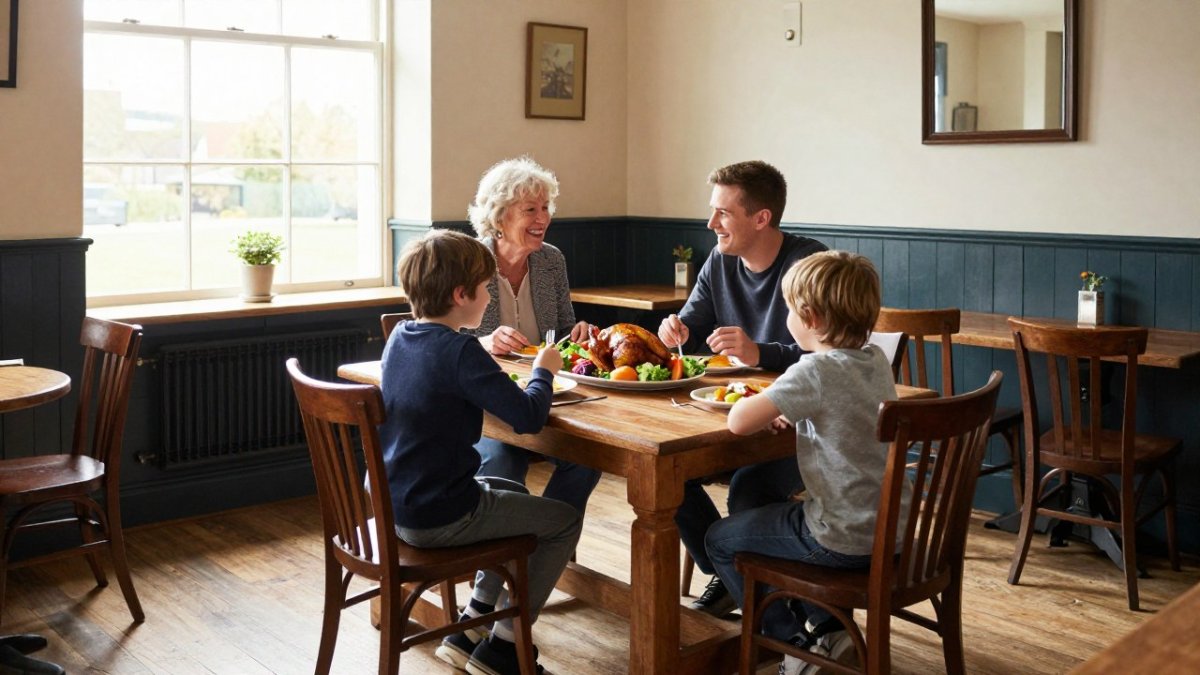
All of this budget cooking at home has a natural counterpart: knowing when to stop cooking and let someone else do it. A family meal out, planned well, can cost less than a chaotic week of top-up shops and wasted ingredients. For parents choosing for younger diners, this guide to healthy kids menu options explains what to look for.
Goose by the Green is a family-friendly pub and restaurant in Crosby, offering nutritious and affordable food for guests of all ages. It offers Sunday lunch, afternoon tea, a 150" screen for sports viewing, and private dining on the Mezzanine.
If you're weighing up a meal out against another night of batch cooking, Sunday lunch is one of the options to consider. And when you're ready, you can book a table.
Frequently Asked Questions
Which kitchen appliances use the least energy?
Small appliances that heat only the food, not a large cavity, tend to use the least. A microwave, an air fryer and a slow cooker all beat a full-size electric oven for small portions. A kettle boiling only the water you need is one of the cheapest ways to heat anything. The deciding factor is portion size: an air fryer wins for one or two people, while a full oven only makes sense when the cavity is actually full.
Is an air fryer cheaper to run than an oven?
For small portions, usually yes. An air fryer heats a small chamber quickly, so it draws power for a shorter time than an oven preheating a large cavity. The gap narrows when you fill the oven completely, because the oven's heat is then spread across more food. If you regularly cook for four or more, batch cooking in the oven and reheating portions later can work out cheaper than running several small appliances in sequence.
Does an induction hob use less energy than an electric hob?
Yes, in most like-for-like comparisons. Induction transfers heat directly into the base of the pan rather than heating a ring and then the pan, so less energy escapes into the room. That also means a cooler kitchen and faster boiling. The catch is the upfront price and the need for magnetic pans: if your current pans are aluminium or copper, budget for replacements when you work out the payback period.
Are energy-efficient appliances worth the upfront cost?
It depends on how often you cook and what you are replacing. Work out the annual energy consumption in kilowatt-hours from the energy label, multiply by your electricity tariff, and compare that with your current appliance's figure. Divide the purchase price by the yearly saving to get a payback period. Swaps with a short payback, such as a kettle, microwave or air fryer, usually justify themselves quickly; a full oven or hob swap needs a longer view.
The challenge is simple: cut the energy waste at home, then spend the savings on a meal you didn't have to cook. Goose by the Green offers a family-friendly atmosphere, a 150" screen for live sport, and private dining on the Mezzanine, all with a menu built to be affordable for the whole family. Get started with Goose by the Green and turn a week of careful cooking into one relaxed meal out.

Comments