
Healthy Kids Menu Options 2026: What to Look For
Updated: 8 hours ago
Table of Contents
What a Healthy Kids Menu Actually Looks Like in 2026
Balanced Meal Components: Protein, Whole Grains, and Vegetables
Sensory-Friendly Options and Picky Eater Strategies
Nutritious Kids Meal Ideas for Every Appetite
Quick Weeknight Dinners That Cover All the Food Groups
Post-School Snacks and Energy Management
How to Choose Healthy Options When Dining Out
Reading the Menu: Sodium, Saturated Fat, and Hidden Sugar
Interactive Meal Assembly and Getting Kids Involved
Best Practices for Kids' Restaurant Menus
Allergen Labelling, Portion Control, and Dietary Variety
Sustainable and Budget-Friendly Family Dining
How Goose by the Green Delivers a Healthy Kids Menu
Conclusion
Last Updated: August 23, 2026
What a Healthy Kids Menu Actually Looks Like in 2026
A healthy kids menu is a curated selection of dishes designed to meet children's nutritional needs across the key food groups, without relying on processed ingredients, excess sodium, or hidden sugars. This guide breaks down exactly what parents should look for, whether they're planning a family dinner out or packing a lunchbox at home.
Many families now expect more than chicken nuggets and chips as the default offering. Restaurants that commit to nutritious kids meal ideas build menus around whole grains, lean protein, and real vegetables, not just smaller portions of adult starters. Below, the guide covers how to read a kids' menu critically, what balanced meal components look like in practice, and how to handle picky eaters without resorting to beige food.
Balanced Meal Components: Protein, Whole Grains, and Vegetables
A genuinely balanced children's meal includes protein, complex carbohydrates, and vegetables in proportions that support growth and development. Protein-rich options like grilled chicken, eggs, or pulses support muscle development. Whole grains, such as wholemeal bread, brown rice, or oats, provide sustained energy and fibre. Vegetables should make up at least a third of the plate.
According to NHS guidance on children's nutrition, children aged five to eleven need a varied diet covering all five food groups daily, including calcium-rich dairy or alternatives for bone development and iron-fortified foods to support cognitive function.
The practical test for any kids' menu is simple: does it cover at least three of the five food groups in a single main course?
Sensory-Friendly Options and Picky Eater Strategies
Many children have genuine sensory sensitivities around food texture, colour, and smell. The most effective approach is building choice into the dish itself. Offering components separately, so the sauce isn't mixed into the pasta or the salad isn't touching the main, gives children control without requiring an entirely different recipe.
Pro Tip Introducing one new ingredient alongside two familiar favourites is a well-established method for expanding a child's palate gradually. The new food feels less threatening when it shares the plate with something the child already enjoys.
For restaurants, this means training staff to accommodate simple modifications, keeping accompaniments on the side by default, and avoiding strong garnishes on children's dishes.
Nutritious Kids Meal Ideas for Every Appetite
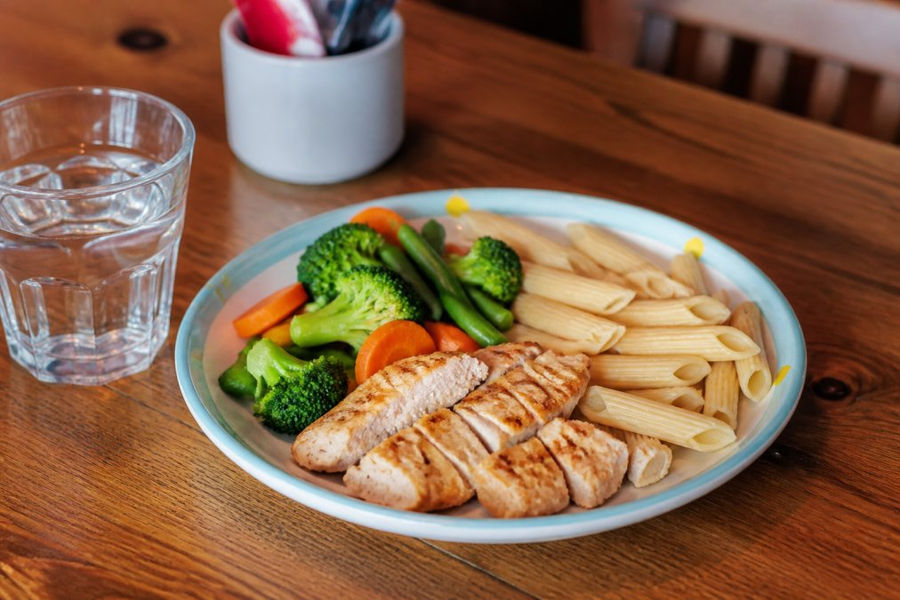
Nutritious kids meal ideas work best when built around ingredients children already recognise, prepared in ways that retain nutritional value. Steaming and grilling preserve more nutrients than deep frying, and batch cooking at home makes it easier to offer variety throughout the week.
Quick Weeknight Dinners That Cover All the Food Groups
The biggest challenge with weeknight dinners is time. Most parents know what a balanced meal looks like; the problem is pulling it together in under thirty minutes.
Dishes that work well under time pressure include:
Baked salmon with sweet potato wedges and peas: omega-3 fats, complex carbohydrates, and vegetable intake in one tray
Wholemeal pasta with hidden-vegetable tomato sauce and grated cheese: fibre, calcium, and vegetables without a fight
Egg fried rice with frozen mixed vegetables: protein, whole grains, and micronutrients from the vegetable mix
Chicken and vegetable stir-fry with brown rice: lean protein, healthy fats, and multiple vegetable portions
The key is portion control appropriate to age. A five-year-old needs roughly half the portion of a ten-year-old, and both need far less sodium than an adult.
Meal | Protein Source | Whole Grain | Vegetables Included | Prep Time |
Baked salmon and sweet potato | Salmon | Sweet potato | Peas | 25 minutes |
Hidden-veg pasta | Cheese/eggs | Wholemeal pasta | Tomato, courgette, carrot | 20 minutes |
Egg fried rice | Eggs | Brown rice | Mixed frozen veg | 15 minutes |
Chicken stir-fry | Chicken breast | Brown rice | Broccoli, pepper, snap peas | 20 minutes |
Post-School Energy Management
The post-school window, roughly 3pm to 6pm, is where many children's nutrition falls apart. Energy dips sharply, and the fastest fix is usually something high in sugar, which creates a second crash before dinner.
Effective post-school energy management relies on snacks combining slow-release carbohydrates with protein or healthy fats. This stabilises blood sugar and sustains energy through to the evening meal without suppressing appetite for dinner.
Practical options include oatcakes with nut butter or hummus, apple slices with cheese, wholegrain toast with mashed avocado, and natural yoghurt with berries. Snack variety prevents boredom and ensures a broader range of micronutrients across the week. Hydration is equally important; many children arrive home mildly dehydrated. Water or diluted fruit juice is preferable to sugary squash.
Watch Out High-sugar snacks immediately after school may resolve the energy dip temporarily but typically cause a second crash that makes dinner preparation harder and children more irritable.
How to Choose Healthy Options When Dining Out
Choosing healthy options when dining out requires a different approach than reading a home recipe. Restaurant dishes are often higher in sodium, saturated fat, and hidden sugar than equivalent home-cooked meals, even when they appear straightforward.
Most family-friendly restaurants now provide allergen and nutritional information on request. Knowing what to look for makes the decision significantly easier.
Reading the Menu: Sodium, Saturated Fat, and Hidden Sugar
The three main nutritional concerns on a children's restaurant menu are sodium reduction, saturated fat content, and hidden sugar in sauces and dressings. A dish described as "healthy" on a menu is not a regulated claim, so parents should look beyond the marketing language.
As the Food Standards Agency's guidance on nutrition labelling explains, front-of-pack traffic light labelling helps consumers identify high, medium, and low levels of fat, saturated fat, sugars, and salt at a glance.
Practical checks when ordering for children:
Ask whether sauces are made in-house or from commercial preparations, which tend to be higher in sodium and sugar
Request grilled or baked options rather than battered or fried
Check whether the children's portion uses the same ingredients as the adult version
Avoid dishes where the description includes terms like "crispy," "glazed," or "sticky"
Interactive Meal Assembly and Getting Kids Involved
Interactive meal assembly is one of the most underused strategies in both home cooking and restaurant dining. Children who participate in building their own meal, choosing toppings, or assembling wraps are consistently more willing to eat what's in front of them.
This works because it transfers control to the child. Picky eaters respond well to agency. A taco bar at home or a build-your-own bowl at a restaurant removes the confrontational dynamic and replaces it with genuine participation.
Best Practices for Kids' Restaurant Menus
The best kids' restaurant menus in 2026 reflect genuine thought about children's nutritional needs, developmental stages, and the practical realities of family dining.
Allergen Labelling, Portion Control, and Dietary Variety
Allergen labelling is a legal requirement in the UK under Natasha's Law and the Food Information Regulations 2014, which requires food businesses to provide clear information on the 14 major allergens. For families managing conditions like coeliac disease, nut allergies, or dairy intolerance, this is essential.
The most thoughtful menus offer two size options or clearly state the recommended age range for each portion.
Sustainable and Budget-Friendly Family Dining
Sustainable family dining and budget-conscious choices are not mutually exclusive. Seasonal ingredients are typically cheaper and more nutritious than out-of-season imports, and dishes built around pulses, eggs, and whole grains cost less per portion than meat-heavy alternatives without sacrificing protein content.
Batch cooking is the single most effective budget strategy for families. Preparing a large quantity of a base ingredient on a Sunday reduces both food waste and weeknight cooking time considerably.
For eco-conscious families, sustainable meals increasingly appear on restaurant menus as operators respond to demand. This includes sourcing meat from farms with higher welfare standards, reducing single-use plastic in children's meal packaging, and building menus around plant-forward dishes with a lower environmental footprint.
Key Takeaway Seasonal, plant-forward meals cost less to produce and have a lower environmental impact than meat-heavy menus. Families who prioritise these options benefit both financially and nutritionally without compromising on flavour or variety.
How Goose by the Green Delivers a Healthy Kids Menu
Goose by the Green is a family-friendly pub and restaurant in Crosby that takes the healthy kids menu question seriously, not as a marketing exercise but as a practical commitment to the families who visit regularly.

The venue is designed with all ages in mind. High chairs are available, the atmosphere is genuinely welcoming, and the menu reflects a real understanding of what families need. Nutritious and affordable food is central to the offering, not an afterthought.
What sets Goose by the Green apart is the combination of quality and accessibility. The kitchen focuses on natural ingredients and honest cooking methods, so parents can order for their children without interrogating the menu for hidden additives. The portions are appropriately sized, the dietary variety is genuine, and the staff accommodate the modifications that families with young children routinely need.
The venue also offers something most competitors don't: a genuinely versatile space that works for a relaxed Sunday lunch, a post-beach dinner, or a private dining occasion on the Mezzanine. The 150" screen means sports-watching visits don't require sacrificing meal quality, and the atmosphere is managed well enough that adults can actually relax while children are settled.
As Which? guidance on eating out with children notes, the markers of a genuinely family-friendly restaurant go well beyond a colouring sheet and a kids' menu insert. The physical environment, staff attitude, menu quality, and flexibility all matter. Goose by the Green addresses each of these in a way that's hard to find in a single venue.
Feeding children well, whether at home or when dining out, comes down to consistent choices rather than occasional perfect meals. Goose by the Green delivers a healthy kids menu within a broader dining experience that genuinely serves families at every stage of the day. To book a table and see the menu for yourself, visit the Goose by the Green website directly.
Frequently Asked Questions
Q: What makes a kids' menu healthy according to UK nutritional standards?
A: A healthy kids' menu should reflect guidance from the NHS and the UK's dietary framework for children: adequate protein, fibre-rich whole grains, at least one portion of vegetables per meal, reduced sodium, and limited saturated fat and added sugar. Calcium-rich options such as dairy or fortified alternatives support bone development, while iron-fortified ingredients aid growth. Portion sizes should be age-appropriate, and allergen information must be clearly displayed under UK food labelling regulations.
Q: What are some examples of balanced kids' meals for dining out?
A: Good examples include grilled chicken with roasted vegetables and brown rice, pasta with a tomato-based sauce containing hidden vegetables, or a small fish fillet with sweet potato and peas. These meals cover the main food groups: protein, complex carbohydrates, healthy fats, and vegetable intake. When dining out, look for menus that offer water or milk as drink options rather than sugary alternatives, and where cooking methods favour grilling, steaming, or baking over deep-frying.
Q: How can I find restaurants with genuinely healthy kids' menus rather than just standard pub grub?
A: Look for restaurants that list ingredients and allergens openly, offer vegetables as a default side rather than chips, and provide smaller portions of actual adult dishes rather than a separate deep-fried-only kids' list. Menus developed with nutritional input, or those that include whole grains, lean proteins, and fruit-based desserts, are a strong indicator of genuine commitment to healthy kids menu options. Reading reviews that specifically mention children's food quality is also a reliable shortcut.
Q: Are there government guidelines that apply to children's meals in UK restaurants?
A: There are no mandatory nutritional standards for children's restaurant meals in the UK outside of school settings, where the School Food Standards apply. However, the Food Standards Agency requires full allergen labelling, and the National Restriction on Advertising Junk Food to Children influences how restaurants market their kids' menus. The NHS Eatwell Guide provides the nutritional framework most responsible restaurants use voluntarily when designing healthy kids menu options.
Q: How do I handle a picky eater when dining out without abandoning nutrition?
A: Ask whether the kitchen can adapt dishes, for example, serving sauce separately or swapping chips for vegetables. Many family-friendly restaurants will accommodate simple changes. Choose menus that include familiar textures alongside new flavours, which helps sensory-sensitive children accept more variety over time. Mild spicing, recognisable proteins like chicken, and colourful plating all improve the chances that a picky eater will engage with a nutritious meal rather than refuse it outright.
To Book a table
This article was written using GrandRanker
Comments